General info about Rhodes
Rhodes, is the largest of the Dodecanese islands, and easternmost of the major islands of Greece in the Aegean Sea.
Its population is about 130,000, of which about 60,000 resided permanently in the city of Rhodes, the main commercial and population center.
Rhodes is the capital of the District of the Dodecanese and of the Province of Rhodes, which also includes the nearby islands of Symi, Tilos, Halki and Kastellorizo.
Geography
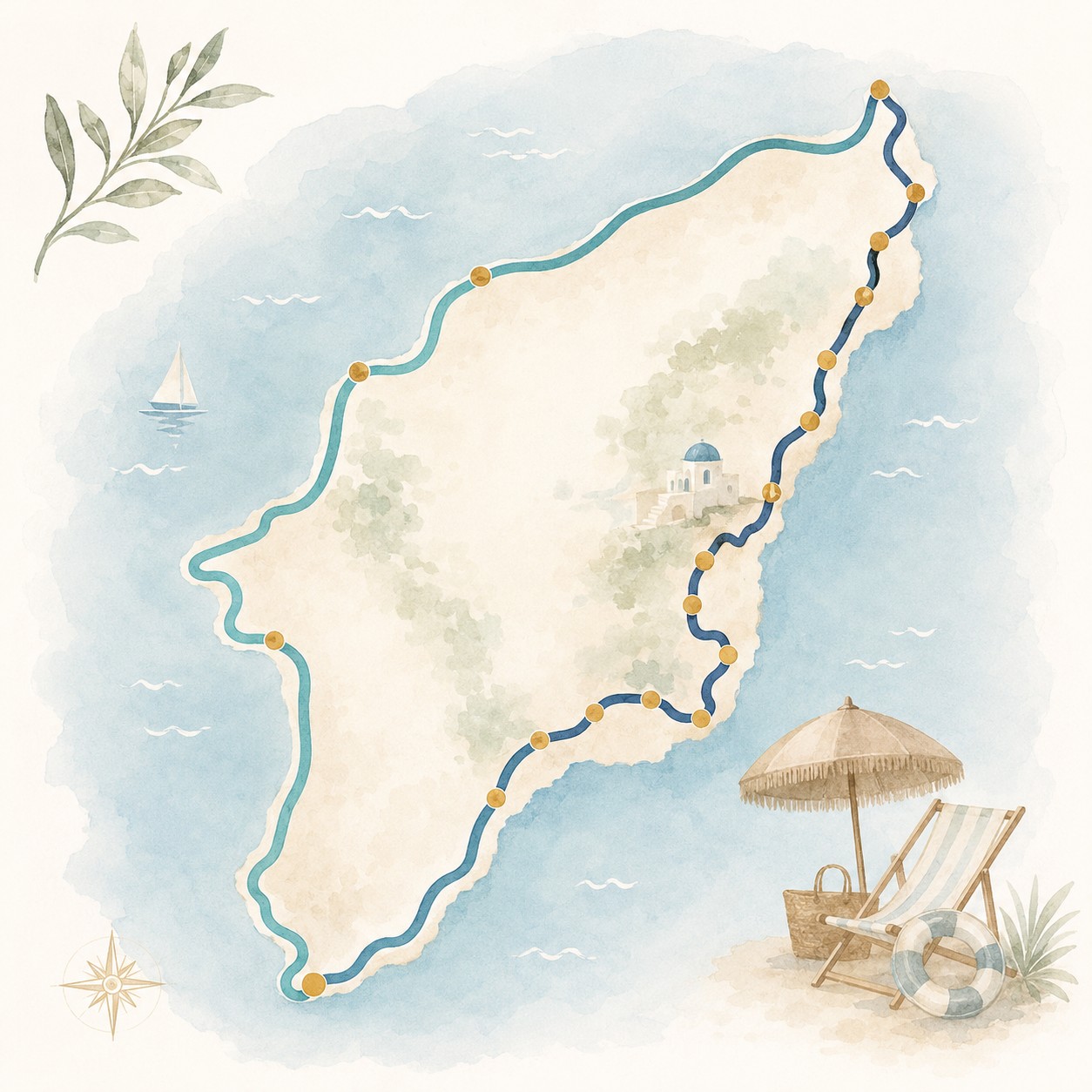
The island of Rhodes is shaped like a spearhead, 79.7 km long and 38 km wide with a total area of approximately 1,398 km² and a coastline of approximately 220 km. The City of Rhodes is located at the far northern end of the island, including the site of the ancient and modern commercial harbor. The main air gateway (Diagoras International Airport, IATA code: RHO) is located to the southwest of the city in Paradisi. The road network radiates from the city along the east and west coasts.
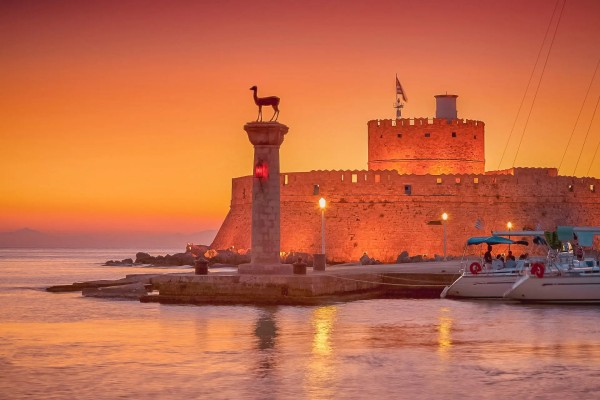
The interior is mountainous and sparsely inhabited, covered with forests of Pine (Pinus brutia) and abundant fauna including the Rhodian deer. Features include the so-called Petaloudes or Petaloudes Valley, or Valley of the Butterflies, where tiger moths gather in summer; Mount Attavyros, at 3,986 ft (1,215 m) the island’s highest point of elevation; and the appropriately named Seven Springs area. While the shores are rocky, arable sandy strips exist where citrus fruits, wine grapes, vegetables, and other crops flourish in the Mediterranean climate.
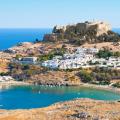
Outside of the city of Rhodes, the Faliraki resort, Lindos, Archangelos, Afandou, Koskinou, Embona (Attavyros), and Trianta (Ialysos) are significant.
Climate-Temperatures
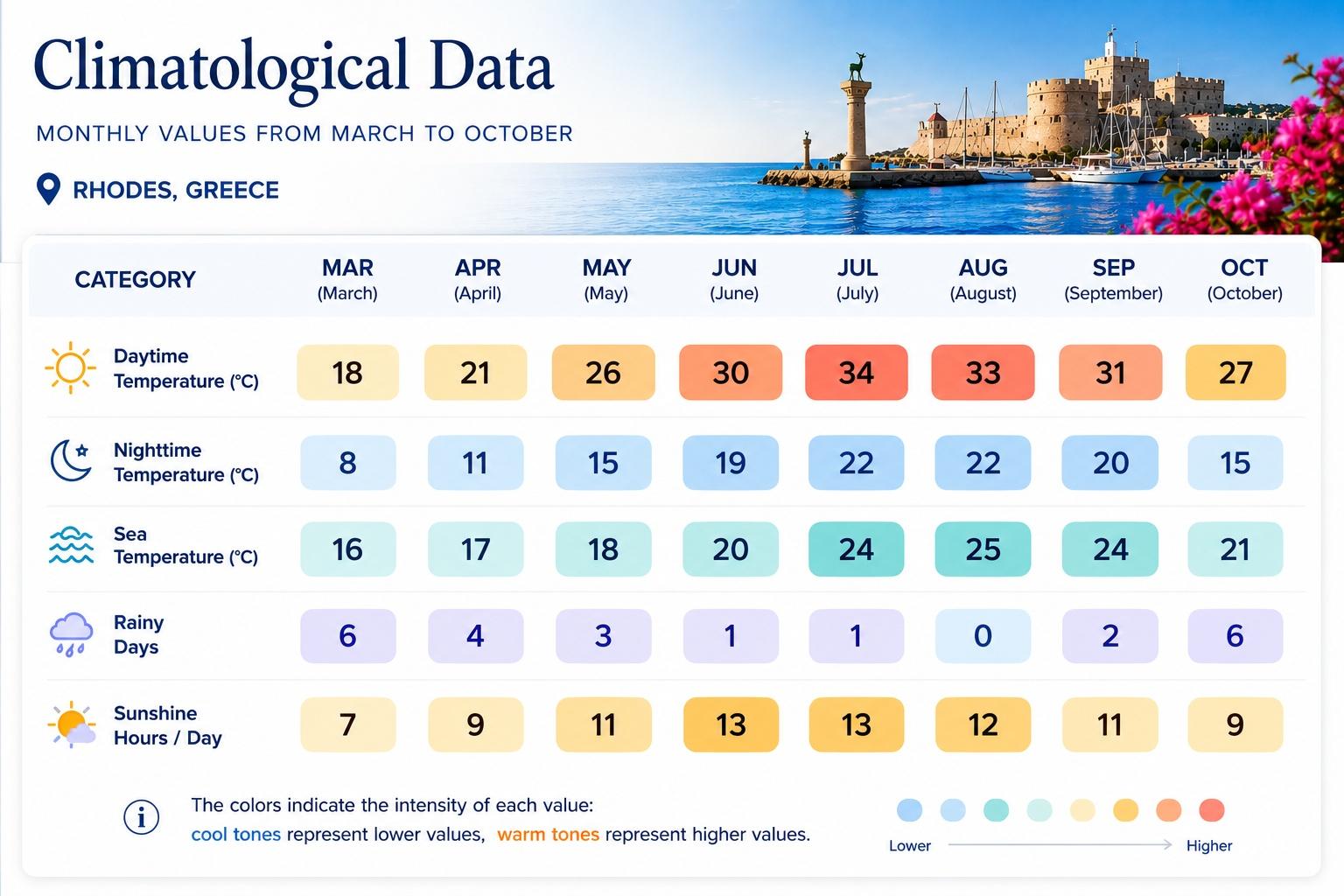
The island enjoys a mild climate with adequate rainfall, which accounts for its profuse vegetation. In reality there are only two seasons: spring and summer. After November, when the first rains fall, the ground is carpeted with green and by February Rodos has become one vast flower garden. May sees the beginning of summer, when the earth gradually takes on a golden colour, until November, when the cycle starts again.
On average, Rhodes has 300 days of sunshine a year, while between April and October, the chances of uninterrupted sunshine are nearly one hundred per cent. During that period the temperature is in excess of 25 C. The summer heat is offset by a cooling, and sometimes strong, sea breeze.